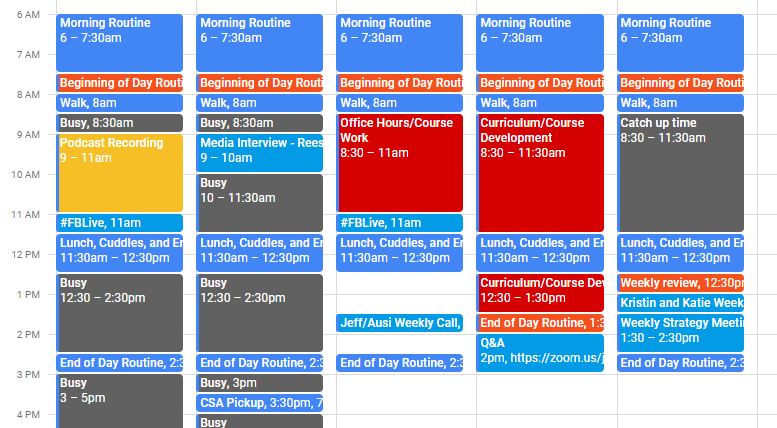
Running a business is much different when you are a Small Biz Mama because you are being pulled in so many different directions all day long. In the parenting episodes, we focus on activities, working with kids, parenting tips, and toddler life (because I’m a toddler mom).
In the activities episodes, we discuss ways to keep your kids busy so you can be more productive while still enjoying your time with them. These are practical episodes full of great tips for all seasons and types of weather.
Working with kids can be stressful, especially if you are the primary caregiver. In these episodes, We’ll discuss how to work through lots of issues that work-at-home moms struggle with so you can get more done.
In parenting tips, we discuss general parenting topics. We’ll discuss things relating to food, education, toys, sharing, and many other topics.
In toddler life, you’ll get behind the scenes in our life to see how we raise our son with two businesses, a college teaching load, and no daycare. We also discuss practical tips like how we get our 2-year-old to help out around the house.
Too many toys? Here are some alternatives for this holiday
Today I want to share what to do when you already have too many toys and the holidays are coming. I will share some alternatives, and how you can talk to your family about what could be a sensitive conversation.
What conversations you are having with your family? Please let me know in the comments below what your suggestions are.
You probably think your kids already have too many toys. I want to give you some kind of strategies, and share some things we do to kind of help things from getting kind of crazy.
Have a place for everything
One thing we do is have a place for all toys. That can be a basket or a bin. We have those shelves from Ikea where you can slide bins into. And we put things like Legos and blocks in there. We also have containers for things like Play-Doh and cars.
One policy we try to keep in place is that when Erik, who’s four, gets something out, he needs to pick up whatever he is playing with before getting something else out. We help him with that as well. And at the end of the day, we pick up anything that is left out.
Rotate toys out
Erik has a lot of stuff. So we only have a few things out at a time. Especially the big things. We only have one big thing out at a time, and we rotate other things. Other toys get packed up in big Rubbermaid containers, and then we put them out in the garage.
Every few weeks, we will pick out new thing to put out for him. There are things that we always leave out, like Legos and cars. But we rotate out puzzles, games, and other small toys.
Rotating toys out, helps keep toys fresh. And it helps kids not get bored with their toys. It also helps kids not get overstimulated by having fewer options to pick from. Kids also tend to engage more with the toys that are out.
You can also do the same thing with books. Rotate them out every couple of weeks.
Rotating out toys and books helps you decide what to get rid of
By rotating out toys and books, that will help you decide what to get rid of. If there is something you take out and your kid doesn’t interact with it, you need to decide if the toy is still age appropriate.
To find out if it’s something he/she is still interested in playing with, try rotating it out several times. And if at that point, he/she is not interested in it then you can decide to donate it to somebody else.
Too many toys? Might be time to donate some
Holidays are the perfect time to evaluate what toys to get rid of. Talk to you kids about blessing other children with their toys they no longer use. Show them that by blessing others, you are making room for new things.
In order to have those conversations, make sure to gauge you kid’s maturity and empathy. Some kids aren’t ready yet for discussing about giving things away. So make sure it’s appropriate for your child.
Other alternatives
If you do get too many toys in December, don’t dump them all in their room or playroom in December. Now is the time to put some things away. That way there is some fresh, new things for them to play with later on in the year.
An alternative to toys for Christmas, is having experiences. So you can ask your family for season passes, or tickets to events.
If you already have season passes to things that interest you and your family, you can ask people to renew or extend your pass.
There are many different options to toys:
Movie tickets
Restaurants
Gift cards
Magazine subscriptions
Subscription boxes
Art supplies
Crafts
Coloring books
Puzzles
Board games
Take an inventory of what you already have
Now is a really good time to go through and take inventory of what you have. Maybe your paints or Play-Doh is dried out. This is the perfect time to ask for those types of things.
Gift giving can be expensive. So having these conversations with your family can be very beneficial. I found this website where everybody puts their name in and it matches people up randomly. That way, you are buying gifts for one person, instead of many.
Don’t be afraid to have those types of conversations. Many people don’t like to have money conversations. You can say, “Hey, I understand that it’s been a tough year. How can we make the holiday fun without putting everybody into debt.” I think most families would appreciate having that conversation.
How are you looking for alternatives for the holidays? I would love to know what your family is doing. What has worked for your family? Do you have any type of gift giving techniques that have worked to help keep down the stuff and help everybody’s budgets. Please leave a comment below.
Today I want to share about parenting in the new reality and some tough decisions that we made. I want you to start thinking about some stuff as we start rolling into fall.
What are you going to do with your kids? How are you going to parent? What do you want to keep?
What parenting in the new reality means to me
This new reality has been hard. As you know, I run two businesses. And there’s never enough time in the day. As I’m recording the podcast at 9:45pm, I can hear Erik still awake.Welcome to the new Florida reality. That is something that I was not prepared for. The sun goes down so late, and Erik has a hard time going to sleep until it is pitch dark. So that’s a fun part of our new reality.
As I write this, the COVID case numbers are going up again in Florida. And many parents are trying to figure out what they’re going to do for fall.
Switching gears in this new reality
When we first got here and we were trying to manage everything, we ended up putting Erik in a Montessori summer camp. Initially, he really liked it. And then he decided he missed mom and dad. We really missed him too.
We were planning to keep him there in the fall. But my mama heart wants to homeschool. I’ve always wanted to homeschool even before we had Erik. I love working with Erik. It light my fire up to see him be so intellectually curious.
So we decided that we are going to homeschool. We pulled him out of the program. And now he is home with us. I’m very excited, but at the same time scared. I’m scared because I know how much work I have to do and how much stuff we have going on. And so managing all that will be tough.
My schedule
As I’m looking at my schedule, we are figuring out who else we can potentially hire to help us. Plus I have to balance all that with the budget and the reality of our income.
We all have a limited amount of money and of time. So you need to figure out how to manage that the best that you can to have the best life for your kids and you.
Spend time figuring out things while parenting in the new reality
Spend some time figuring out what has worked or not. One thing that has worked well for us is having dinner together. It’s a game changer. It doesn’t matter what we have for dinner. But just sitting outside talking, laughing and eating dinner, is the best part of our day.
Another thing that you need to think about is doing things together and spending time together. That is so important. For us, doing something together after dinner is important. Having a lazy Saturday morning is also important.
Make a list of things that you want to do, as well as things you want to avoid. You need to go back to what you want your life to look like, especially as things are returning to a new normal.
If you are not intentional about designing the life you want, it’s not going to happen. You need to visualize the type of business and life you want. Ask yourself:
What does that look like?
How do you feel?
Regarding work, how much do you work and how many clients do you have or want to have?
What do you want in your life?
Do you want to avoid certain things? What do you want to avoid?
If you don’t think about those things, you just kind of flow with whatever is happening. Even if you don’t like it.
As moms, you work hard, but sometimes you just don’t take the time to think if that is what you want. Many times it is not what you want for you or for your kids.
And as I started being more intentional in our days and in our mornings, I’ve just enjoyed it more. What I want for you is to have the time to make memories and take time for those moment.
Welcome to third post in the series Winning at…with Jeffery Ingram. Today we’re going to share about parenting and how we parent together.
Before Erik was born, we had a podcast called Small Biz Life. You can go to smallbizlife.com and check it out or wherever you listen to podcasts. It has a lot of timeless things that are still relevant today. We stopped doing that show together because it was just too hard for us to schedule as Erik got older.
But for now, we will share what has worked for us to parent together in the midst of businesses, COVID, and all the things.
Using a schedule as a strategy for help with winning at parenting
Jeffery:
When Erik was really small, we took advantage of the time when we could work. If you listened our business episode, you’ll find that Kristin works really well in the morning. When she wakes up when she’s supposed to, it can start the rhythm. The problem is if she has to wake up two hours early, her body will reject that rhythm. She needs her sleep and she needs to wake up about the same time.Since I was a soldier, I can wake up anytime and my brain will force me to explore and do it.
When Erik was a baby we had a 2:30am cutoff time. Kristin was more of a night owl, and I was the one waking up in the morning with Erik. So Kristin would take care of Erik before 2:30am and I would be on duty after that.
Kristin
We had Erik in December. And being a tax accountant, we were going right into tax season with a newborn. Both of us were working from home. And so we had to figure out a way to make this work instantly. There was no room for error.
We had to figure out how to make this whole thing work with a newborn. Luckily newborns sleep a lot, but they don’t necessarily sleep a lot at night or in a row. We read the book Baby Wise, and it helped tremendously.
We created this sleep, eat, sleep, play cycle. And we would just cycle through that all day. That was really critical to us being able to get stuff done when Erik was really little. All bets went off when he started walking though.
Winning at parenting is the realization that there is always going to be changes
Jeffery:
Every parent goes through this at some time. When he was one, he was mobile and experimenting. Then he was two and three, and he starts to have his own opinion.
It’s the realization that there’s always going to be changes. You have to be cognizant that it’s always changing. All kids develop differently. “Average” is just a lie.
Having an on-call parent to help with winning at parenting
Kristin:
One thing that was really hard for Jeff was that he wanted to fit all his work he was doing into the time he had. Erik was only taking one nap.
Jeffery:
And that’s really impossible, especially during tax season. Because Kristin has to have more desk time. You need help to get any work done, especially if you’re the on-call parent.
When you have the business too, and even if it’s not a business together, you have to have an on-call parent. You will always get interrupted by your kids, but having an on-call parent is great. Because then you don’t have to sit there and get into fights over who’s turn is it.
You know that which parent is on-call from what time to what time.
Kristin:
I tend to work in the mornings and Jeff works in the afternoon. So the way that it typically works outside of tax season is if Erik naps, then I can work a little bit more in the afternoon. But if he doesn’t nap, I’m getting up with Erik. However, during tax season, that kind of flips.
There are times that Jeff won’t get into the office in a day and that is frustrating for him.
Jeffery:
Erik will not let you be on the computer. We don’t want too much screen time. Since Erik is an extrovert, he needs interaction with people. He demands that interaction.And when you’re three and you demand interaction, you will keep doing bad things to get the attention if that’s all you can get. Even with introverted kids, there is always a need to interact with their parents.
Activities to help kids stay entertained to help with winning at parenting
Teaching independence at a young age
Kristin:
When Erik was really little he just had to entertain himself. He had a little area in our office. He was either in the pack and play or he had a bigger play area. So he would play on his own and we always encourage that, but he was always with us. This allowed him to develop some independence really young, which allowed us to get more done.
Jeffery:
And even now we have this technique. On a good day we can get him started on something. And once he gets started on an activity, he can sometimes go up to an hour and be focused.
Kids need to learn from you. So they want to be with you.
Figure out what your kid’s thing is
Kristin:
You need to figure out what your kid’s thing is. Erik will play with his trains and trucks for a long time. He’s at the age where he likes to sort things. He keeps going in and out of this sorting cycle. He likes to sort pom poms into little cups. We got him these cool buttons. They come in different colors and different shapes. And so some days he’ll sort them by shape. But some days, he’ll sort them by color.
If you have a little bit more tolerance for mess, you can put shaving cream on a tray with some little spoons and measuring cups. You can put some water in the sink and let your kids wash their trucks or matchbox cars. Play sand, like Kinetic Sand that sticks is also a great activity. Play-Doh is very effective. Watercolor paints are another favorite. There are lots of activities you can do. It just depends on your mess tolerance.
As your kids get older, then those needs change. But there’s so many activities out there for kids. Use Google or Pinterest to find lots of stuff.
Be fully present with your child to help with winning at parenting
Jeffery:
The biggest thing though, is the realization that when you’re doing something with them, you have to be fully present. Your child will know when you’re not being fully present and they’ll be very vocal about it.
Even if they are not very vocal, they absorb all of the information. Typically most bad behavior is just essentially trying to get your attention.
Kids at a certain age will go nuts when they are tired and don’t want to fall asleep.
Kristin:
A book that really helped us with this is “No Bad Kids” by Janet Landsbury. That book has a lot of great techniques for working with your kids. But also like Jeff said that the understanding that really little kids are not trying to be bad. Most of the time they just want your attention.
Jeffery:
Sometimes it’s not right now. But kids don’t know that. It’s all about learning. Even when they’re dropping things on the floor, they’re trying to learn how this thing will fall at this moment in time. And they might have to do that a thousand times. So get them something that they can drop because they will want to do that activity.
You can get them started doing a similar activity that they are trying to absorb. They’ll go through these different phases. And if you focus it and get them started and let them play a little bit, let them make a mess a little bit, or work with someone who will do that. You know, it will ultimately help them become more independent.
How we use Montessori to help us with winning at parenting
Kristin:
We read and study a lot. And we’ve adopted a lot from Montessori. Knowing that there are certain phases that your kid goes through is so important. For example, if Erik is in a mindset that he needs to sort, he’s going to sort whatever he can find.And so if I don’t give him something to sort, you’re going to find the weirdest stuff around the house.
He will go through phases where he needs to dump things. And so for a long time, that was feeling like putting random stuff in those containers so that he could dump them into his truck and then dump his truck and do it again. And so when he goes through those phases, we need to give him stuff to pour and stuff to dump into. It’s a really good opportunity to give him a bowl of water and some measuring cups.
Jeffery:
And just let him pour. That’s how he learns volume. And how he learns about how much goes into a cup is by pouring it.
Observe what your child is doing
Kristin:
It’s critically important when you have little kids to observe what they’re doing. Even if you don’t like what they’re doing or what they’re doing it with, then you need to figure out what your child is trying to accomplish.
Jeffery:
You need to be constantly coming up with a solution that solves a problem. And figure out what’s the next thing.
Kristin:
But if you’re constantly in the mode that you’re observing, then figuring out the next thing is easier. We’re not parenting experts by any stretch of the imagination. But the thing that we do do is we experiment. And we observe and we just try to see what’s going on with our son.
Team mentality will help with winning at parenting
Kristin
But then the other thing is that whole team mentality. It’s us versus him. And sometimes it takes both of us. We still lose and we still lose sometimes.We are also really good at tagging it. If I have reached my limit and Jeff sees that I’ve reached my limit, he’ll go in. Especially at bedtime.
Jeffery:
This helps you observe in a different way. You can both have a discussion together and figure it out.
Kristin:
In everything that we do, we try to be intentional. We try to course correct when things aren’t going well. And at the end of the day, we always go back to, we are a team.
Jeffery:
Sometimes you have to question yourself and see if being upset over and over again is making anything different. It probably isn’t. And so you have to be able to sit there and figure out what you need to change. To try a different tactic. And it’s tough when you’re in that moment.
But sometimes if you can at least go back over in your own head or hopefully you have a spouse or a loved you you can work with to come up with better ways to do it.
Working together as a team is ultimately what will help you with winning at parenting.
Let us know in the comments below what tips and strategies have worked for you.
How to prepare children for college before they start school
How can you prepare your children for college before they even start school? If you didn’t know, I have been a college professor for the last 12 years, and I see the same issues popping up over and over again in college students who are not successful.
A lot of the skills college students are missing are skills that you should start teaching your little kids so that when they get into middle school, high school, and college, and they have more freedom they do things well. And they are successful.
Three things to focus on to prepare children for college before they start school
I’m going to share three things you need to focus on to prepare your children for college before they start school:
Routine and planning
Independence
Decision-making
The reason I focus on these three things is that these three things are really going to help your kids succeed as they increase their independence as they go through the levels of school.
Especially when they reach college. Because what happens for a lot of kids is that when they reach college, they’ve never had to put their own routines in place. They’ve never had to do their own planning. There isn’t much experience with independence and they don’t know how to make decisions. And so when they get to college, there’s all of this overwhelm and then they just shut down.
How routines and planning helps prepare children for college
Routines
Routine is incredibly important in very, very young children because it gives them predictability. It helps them feel more secure because when things are predictable and they know what’s going to happen, it makes their lives a lot easier for them.
Establishing routines brings a sense of security little kids need in order to thrive.
Your routine does not have to be exactly the same every single day, but it is very helpful to have a rhythm to your day. According to Simone Davies who wrote the Montessori Toddler, she says that it’s not having a timetable, but having a rhythm to your day.
And so that means that your child wakes up. Then you do the next thing. You aren’t following the clock, but your creating routines so that your kids know what the next thing they need to do after they wake up.
Example of a routine
In our house, one of the routines that we have is that we have lunch, and then we have mama time. Mama is stories, cuddles, and talking about the morning and what we did. And then Erik has rest time. After rest time, we have more mama time. So the afternoons are usually a project. We’ll do some art, something that’s really fun to help ease us into independent play so that I can make dinner.
Establish a routine that gives you a flow to your day. A rhythm of what your day is going to look like. And the reason that that’s important is when kids get to college, the routine looks a lot different than it did in high school.
Planning
Since the routine looks so different in college, it’s important that you teach your child how to plan.
When your child is in high school, they are in school 7-8 hours, Monday through Friday. In college, they might have a class two days a week, or maybe they’re only in class a couple of hours a day, four of five days a week.
College doesn’t do a really good job of teaching what is expected of students when they come in. So most students are going to spend about two and a half hours a week inside of class for each class they take. However, it’s expected that college students are going to spend usually two to three hours outside of class for every hour they put in.
When your child doesn’t know how to plan they will fail in college. They will think with just going to class is enough. They fail to plan for the extra time required for each class. Or they put too much on their plate.
Your children need support from you, even in college. As parents, you need to sit there alongside them and show them how to plan their day. How to calculate how much time it will take them for each class, plus how much time they need to get work done and study. Then they will know how much time they have for work.
How to teach your child planning to prepare them for college
You need to teach your child how to plan their day. Even at a young age, you can do this. For instance, with Erik, we have this little magnetic board. This board shows what our routine looks like. Here’s the next thing you want or need to do. If we want to change things around, we can give him choices.
Teaching your children how to plan is so important
I don’t want you to helicopter because that doesn’t help either. We’ll about independence in a second, but show them how to do planning.
As your children get older, you need to teach them how to plan their day. In middle school, they can use a planner. Show them how to use it and how to plan out their day.
Teach them how to plan out their week. In Bookkeeper Training School, one of the first things I have our bookkeepers do is have them do an exercise where they have to allocate their 168 hours every week. And we did a podcast episode about this a few episodes ago where I walk you through how to do this.
I do the same exercise with my college students. A lot of time they realize they have so much unallocated time. So now they have to figure out what to do during that time.
How fostering independence helps prepare children for college
The second thing you need to teach your child is independence. As a mom of littles, it’s really hard to make the transition between doing everything for them and giving them some freedom and independence.
Children naturally get to a point where they want to do things for themselves. You as a parent need to put structures in place so that you can foster that independence in your child.
For example with Erik, he can get the peanut butter out of the cabinet. He can get himself a plastic knife, and reach the bread. And he’ll make himself a little sandwich. Now mind you we’re in the room so that if he does need help we can help. But we try to stand back and let him have some freedom to do it on his own.
It’s incredibly important to give your kids the independence to do things on their own.
Have your children do chores around the house and then as they get older give them more responsibility and give them more independence.
And then, when they are old enough, have them get a job, even if it’s just a summer job.
How getting a job fosters independence, routines, and planning
Allow your children to get a job. This will teach them how to manage their schedule and learn about people and customer service. It allows them to make some money and learn how to manage that money.
By having a job, your child will learn all about routines, planning, scheduling, and being independent. And this will be so beneficial for them in the long run.
And honestly, they will do better in school because with having a job, they will see the importance of gaining new skills, get better grades and focus more in school.
Ways to foster independence in children
Think about other ways you can foster independence in your children. Can your kids make dinner? Do laundry? Have basic survival skills?
You need to make sure that your kids have the life skills that they need. Teach them how to manage money, cook, do laundry, clean, vacuum properly. Make sure they know what cleaners to use when and what things not to mix together. Teach them to understand how to use basic tools. Teach them how to handle conflict so that they don’t shut down.
The best thing you can do is help teach your child how to take care of themselves. Figure out what are the critical skills that your kids are going to need, and make sure they know them.
How decision-making helps prepare children for college
It’s critically important that you teach your kids how to make good decisions. Teach them how to assess what’s important and what they need to focus on when they feel overwhelmed.
Your children need to know how to make decisions and how to set priorities.
When your child is little you can have them pick which two shirts they want to wear. If they want to go outside to play or play inside. Having them make little decisions right now helps them get some control.
Get your kids involved in meal planning, family vacation planning. If they have a choice of where they get to go to school, let them help with the decision making process.
Think about how you can get your kids involved in just routine decision-making because the more decisions they make as they are growing up, the easier it will be for them to make good decisions when they get to college.
If you’re not allowing your kids to make some higher level, impactful decisions, when they get to college and they have to make good choices, they’re not going to do it.
Give your kids a chance to make decisions while it’s easy. And while they’re not going to do something that is going to impact the rest of their lives.
What determines if children will be successful in college
When I look at the kids that are really successful in college, they are really good at these three things. They’re really good at planning and putting together their routines. They don’t stress out. They have an entire routine and it works for them week to week. They are independent and have good solid decision-making skills.
So start implementing routines and planning, independence, and solid decision-making with your kids while they are really, really young. And you’ll be setting them up for success for the rest of their lives.
Please share in the comments what you are doing to foster these three things in your children.
How can we do kids and screen time and not feel guilty? Originally, I was going to share all about the things you already know about screen time. That screen time is not good for kids. Kids spend way too much time on screens and it’s contributing to the obesity epidemic. And all the things that you probably already know about screen time and children.
And I thought, Kristin, we’re in the middle of a pandemic. All bets are off. So here’s the thing. What I want to share with you is how to use screen time in a way that is not going to make you feel mom guilt. I’ll share some tips and some tricks.
Here’s the thing. You are going to have screen time. You’re all stressed out to the nine. And you have way too much on your plates. The last thing that you need is to feel guilty if your kids are watching a little bit of TV.
Minimize continual screen time for kids
So what you can do is try to minimize continual screen time. There might be days when your child does not watch TV at all. And there are days that he/she will watch more TV than what you are probably comfortable with.
So how do you minimize continual screen time?
What you need to figure out is:
What do you need TV to do?
What is the purpose of putting your child in front of the TV? Maybe you want them to learn something, be entertained, get moving with music.
Once you know what the objective is for using screen time you can ask, “What can I do instead?”
What to do with kids instead of screen time
Here are some things you can do instead of screen time:
Print out coloring pages and have them available to use when you need to focus on something and your child needs something to do
Let your child use watercolors. Watercolors are something that you can do on normal paper.
Legos or block
Play Do
How to create excitement around toys to decrease screen time
When you need to focus on something to just get something done, you can pull out toys to entertain your kid.
Legos, blocks, cars, or any kind of toy that your child gets excited about will really work to keep them entertained. Find those toys that your kids get really excited and fired up about when you bring them out.
What I do is save those toys and only get them out when I need time to really be able to focus on something.
So think about what are the toys that really get your kid excited, especially when they don’t see them for a little while. Think about what that is for your kid and how you can incorporate that in a strategic way. Your kid will really focus on it and be excited and play with it for a while.
What you do is take those toys when your kid is asleep. Get them out of the general play area so that when you take them out and tell them to play with this, it’s a big deal. And it’s a fun thing.
Get your kids moving with screen time
Find TV shows or video games that involve a lot of movement.
You can pick shows that have a lot of music in them. Erik is a big fan of Fraggle Rock, which we have on DVD. And he loves the intro. Erik cannot make it through an episode of Fraggle Rock without getting up and running around and dancing to some of the songs in the show. So that’s really cool.
There is a video game on Nintendo that we like to use as well. It comes with this ring. It’s a workout game and it’s has a whole bunch of little mini-games and levels and things like that. But it’s really cool because it’s all movement. If you’re not moving, you can’t play the game.
If you can find experiences like that for your kids that will keep them moving and keep them going while they’re in front of the screen, then that’s a really cool thing to do too.
Break things up to limit continuous screen time
It really helps to break things up a little bit.
Netflix has a whole bunch of series now where each episode is about 11 minutes long. So you watch an episode, you run around a little bit, you play with something, you distract them with something else that they have, and then maybe go back to it later.
When you see your child get into zombie mode in front of the TV, it’s time to switch things up.
Remote schooling
Now I know some of you have older kids and they are either full-time remote schooling or part-time remote schooling. What I would really encourage you to do, even if the school’s not doing it, is to make sure that you work in breaks.
Make sure that your kids get time outside. It doesn’t matter how cold it is unless frostbite is an issue. Bundle up your kids for a little bit and take them outside. Let them run around a little bit in the fresh air.
It’s really not good for kids to be schooling this way, but you don’t have a lot of options right now. But I would really encourage you, even if the schools aren’t doing it, take some breaks, and get away from the screen.
Do what you are comfortable with
You need to think about what are you comfortable with as a parent and give yourself some grace because they’re going to be those days where you just need to do a little bit more.
Which means you need to allow some more screen time. Because you need to do something. You know, typically Jeff and I will reserve that extra screen time for days if we don’t feel well, or one of us doesn’t feel well and the other one really has things they have to get done. That’s a good use of that screen time.
But don’t ever be hard on yourself for letting your kid watch TV. Especially if it’s an occasional thing.
Mama, you work so much on your schedules. And a lot of times it feels like there are never enough hours in the day. But you do this to yourselves, and then you kind of drag your kids along with you. And I’m totally guilty of this. I do this too.
You have these unrealistic expectations of what you can get done and what your kids can get done and what all of this should look like.
And it’s exhausting. I get it. I do. You just need to give yourself a little bit of grace. It’s okay. There’s lots of really great educational TV for kids. You can find some great musical programming. There’s good stuff out there and nice short episodes to keep kids engaged.
Don’t be hard on yourself
Don’t be hard on yourself. There are times when you just need a little bit of time for yourself. It’s okay to have them watch something. It is all right.
I gave you some ideas for some things that you can do if you do want to decrease screen time. But also, I want you to understand that it’s okay when you need to use screen time. Especially during a pandemic when everybody’s at home all the time. It’s all good.
If this resonates with you, please help us out by sharing with your friends by using our share buttons. Let them know about the podcast. If you see one of our posts about a podcast episode, share it on your timeline. Take care mamas!
Part 2: Montessori Homeschooling -Interview with Aubrey Hargis, Child of the Redwoods
Welcome to Part 2 of Montessori Homeschooling. Aubrey from Child of the Redwoods is here to share with you how you can homeschool your child using the Montessori method. In this segment, she focuses on what Montessori homeschooling looks like for older children, ages 7 and up. (If you are looking for information on Montessori Homeschooling for younger children see Part 1.)
Who is Aubrey Hargis?
Aubrey Hargis, M.Ed., is a parent coach and educational consultant best known for her empathetic approach and appreciation for the magic of childhood. As a life-long Montessori advocate and AMS certified guide, her passion has always been to bring Montessori into the mainstream. She is the author of two books: Baby’s First Year Milestones and Toddler Discipline for Every Age and Stage.
As the founder of the Child Development Institute of the Redwoods, she creates online courses and coaches parents in compassionate discipline techniques and Montessori education.
Aubrey lives with her husband and two homeschooled children under a blanket of San Francisco fog, where the coastal cliffs and nearby redwood trails are always beckoning for another adventure.
What does Montessori homeschooling look like for children in the elementary grades?
At the elementary ages, homeschooling can look really different every single year. You will need to make a yearly decision if you will continue to homeschool or if you will send their kids back to school.
Homeschool before COVID was different! Something that was consistent was getting out into the world. It was going to museums, exploring your community, taking the kids to the grocery store and involving them in all of the daily life stuff. That was all part of your homeschool life. Typically, you will not a sit at a table and work from a desk all the time during the school day.
Montessori Homeschooling and Park Days
During the elementary years you have a consistent park day once a week. This park day will be your anchor for your homeschooling week.
You devote that whole day to just socializing outdoors, having fun, being with friends, relaxing, and not worrying about any kind of lessons or anything particular to do.
Montessori Homeschooling During COVID
With COVID, you no longer have the park day as your anchor for your week, you have to stay home and the only way to see friends is virtually.
Now, how do you homeschool now that you are home all the time? You need to reserve a specific block of time to work with your children. Sometimes your homeschooling time will will shift depending on your work schedule. So don’t worry if it’s not at the same time every day.
But you need to block off that time in your planner. If you don’t plan for it, it will not happen! The day will just slip away. You will find that there is always some kind of work or home responsibility task to do. So, don’t be afraid to work out the kinks.
At this age, your children can occupy their time easily, which makes it easier for you to get work done.
How to build your Montessori Homeschooling schedule and pick classes
The beauty of homeschooling is you can change your schedule to fit your day.
At the beginning of every school year you have an opportunity to take different classes. You can piecemeal your homeschooling life together and you don’t necessarily have to do it by yourself or be responsible for the whole thing.
And in the elementary ages, somewhere around age seven or so, you start to have a rhythm of taking regular classes every semester. Typically you will take care of reading, writing and math at home, and everything else can be taken elsewhere, whether it be in person or virtual.
Your schedule will really fluctuate. It is your responsibility every year to put your kid’s classes together and make sure you are covering all subjects needed, and then create you weekly and daily schedule from that.
Homeschooling Co-ops and Out School
You can have your kids in a little micro school or a homeschool co-op. With these types of classes you get together with other homeschoolers and someone else or you will teach a little class or have a tutor come to just teach for an hour for one subject.
During COVID , you can use Out School, where you can do live online classes and camps. These classes are not big time commitments either. A lot of them are just one off classes, so you pay $10 and you just get that hour with that instructor on whatever topic your kid is interested in. There are many classes to choose from.
You and your kids can look through their classes and pick out a few just to spice up what you’re doing. Otherwise it can get very rote with just you and your kids.
If you don’t have anybody else helping you with your child’s learning, it can be exhausting, especially if you’re trying to work at the same time.
Homeschooling for Middle-School
When you homeschool your middle-schooler you can find many different options online. Your middle-schooler can take history and government classes through Online G3. It’s a very traditional online school and you sign up for a semester class. That class will run the whole semester.
Now, each child has different interest and styles of learning. However, you can find many different online classes depending on how your kid learns or what his/her interest is.
Often in Montessori, you think of creativity as being an arts or language heavy focused thing. But there’s so much about tech that allows them to be creative in our current world. There are so many online tools and software that can be used, such as Photoshop and Audacity.
Involve Your Middle-Schooler in Your Homeschool Planning
Talk with your middle-schooler as you are planning out your homeschooling year. Find out if they feel like there is something that they aren’t really good at and want to focus on for the year, interested in learning. Figure out what you are comfortable teaching and find someone else to teach those classes you aren’t.
For example, if you are not a math person and you really have no desire to learn algebra right now, you don’t have to. You can hire a tutor for math, and find someone who is willing to work with your kid’s needs.
The older your kids get, the more you are going to continue to piecemeal things. You might do online high school for all subjects, or you might piecemeal it and attend little co-ops with different classes here and there. You will then put together his/her transcript at the end of his/her high school years.
It’s important that your kid gets a say on if he/she wants to go to public school or if he/she wants to continue to be homeschooled. And if he/she chooses homeschooling, your kid can decide whether to do it piecemealed or to attend an online high school.
The only worry at this point is making sure your child gets enough social time. The younger they are the bigger the playgroup choices are for homeschooling, however, the older they get, more kids do enter school and start going into different situations.
How to Go About Picking Curriculum for Homeschooling
As more and more homeschooling resources popup it can be very overwhelming to know what to pick. If you are feeling overwhelmed with going online and browsing for curriculum, just pick one. It will be okay. Just pick a curriculum. Don’t get stuck in the research phase. Definitely look up the review though, as there scamming out there. There always is when something is popular. And right now, homeschooling is suddenly very popular.
Researching Homeschooling curriculum
Look at reviews
Got to actual homeschool communities on Facebook and see what people are chatting about
Most homeschoolers are going with tried and true resources. As you do a little bit of research, try not to overthink it too much.
The big thing is no matter what curriculum you go with, that is not the success of your homeschooling. Your success will be what you do with that curriculum.
Curriculum is just a resource
All curriculum is just a resource. You can use an old fourth grade math textbooks from 1983, or all kinds of little workbooks that will help you decide how to teach a particular concept. Or they can help you get inspired on a subject.
Do not get stuck in the comparison trap
It’s easy to get trapped in the comparison. For example: Which math curriculum should I go with? Should I do Right Start? Or should I do Math-U-See? Both of them are sort of Montessori base. Both of them are about the same price, and both of them come with manipulatives. Which one should I choose? Which one is right for my child? You just don’t know. Just pick something and try it out.
You do not have to purchase curriculum. There’s so many free resources online. And then you just explore that and see where it goes with your child and see what speaks to your child. And then the next year, if you decide to homeschool again, you’ll know which one you liked and which one worked for you child and you can just pick the next level up. Or, you didn’t really like that one, you’ll try something new.
Let me know what stage you are at with your homeschooling journey in the comments below!
Part 1: Montessori Homeschooling – Interview with Aubrey Hargis, Child of the Redwoods
Are you feeling overwhelmed with remote schooling or the idea of homeschooling? Aubrey from Child of the Redwoods is here to share with you how you can homeschool your child using the Montessori method. In this segment she focuses on what Montessori homeschooling looks like for younger children from ages 3-6.
Who is Aubrey Hargis?
Aubrey Hargis, M.Ed., is a parent coach and educational consultant best known for her empathetic approach and appreciation for the magic of childhood. As a life-long Montessori advocate and AMS certified guide, her passion has always been to bring Montessori into the mainstream. She is the author of two books: Baby’s First Year Milestones and Toddler Discipline for Every Age and Stage.
As the founder of the Child Development Institute of the Redwoods, she creates online courses and coaches parents in compassionate discipline techniques and Montessori education.
Aubrey lives with her husband and two homeschooled children under a blanket of San Francisco fog, where the coastal cliffs and nearby redwood trails are always beckoning for another adventure.
What does Montessori homeschooling look like for children in the preschool age range?
Aubrey comes from a teaching background and she knows what classroom teaching is supposed to be like. She also knows about the Montessori classroom and what kind of magic goes on inside Montessori schools. It’s really, really amazing to watch these young, young children doing such high level work independently.
As Aubrey decided to homeschool, she realized that it feels really different than being a teacher in a classroom. As a nurturing mama, you cannot separate the parent education from the child education. And with homeschooling you need to take into account that you live inside your homes too.
So a homeschool environment includes all the things that you need for your children, for yourself, for your husband and for your home. And all that, is part of your homeschool life.
Montessori Homeschooling Preschoolers
At the preschool stage, keep things simple. Follow a basic routine. Let your week follow a very basic rhythm. At this age it is important to have outside time. Playing is so important and cannot be overlooked at this young age group.
Homeschooling at that young age does not need to be an academic experience. It literally can be your child playing in nature, you enjoying them, and then coming back home. You might give a little Montessori lesson. Make sure it’s not something really intense, but still follow your child’s interests. Spend time playing together, read stories and relax at home. Follow your child’s natural rhythm.
It should be very relaxing at that age. Your child just needs you to provide rich and interesting things for them to experience. Your child at that age is typically helping you with things you normally do.
At what age do you put more structure into Montessori homeschooling?
When a child hits 4 or 4.5 years of age, things change developmentally for them. They all of a sudden become more social. They’re more interested in having conversations. And this is often the age where you start getting into these why conversations with your kids. They’re just constantly wondering about the world and they start really leading any lessons that you give.
Play time is still very important because your child needs lots of movement. They still need sensory experiences. They still like to dip their little fingers into the finger paints and explore. The senses remain important, but they are not the primary focus at that age.
The child shows a more academic interest. That’s usually when they start becoming more interested in math.
At this point, that’s when your lessons should become more structured. You do a little more planning. You observe your child and write down what they are doing.
Homeschooling Kindergarten
As you shift toward kindergarten you will notice that your child’s attention span is much better in the mornings. So focus more on the academics in the morning.
You also need to see what a typical kindergarten is expected to learn. As a montessorian, you don’t necessarily expect your child to learn everything on this list. You still follow the child’s interests at that age, but it’s important for you as homeschooling parents, to be aware of what your child is expected to know in their culture.
This list can help inspire you to see if this is something that is important or something that your child is really interested in.
How much time should be dedicated to Montessori homeschooling in Kindergarten?
Reserve a two-hour block of time that you will spend with your child. You are completely focused on your child. Do not listen to the dryer ding and go off to take care of the clothes. If you have younger children, have them go with you and be a part of homeschooling your older child.
Devote those two hours to homeschooling. Help your child learn. Not all homeschooling has to happen in a designated area. You can migrate to other areas of the house to do a craft or do your lessons.
Even when your official homeschooling hours are up, little lessons will pop up as learning opportunities arise or as you are out and about exploring your world. Or as you are reading books, you can give an impromptu lesson about whatever it was your child seemed interested in right there.
Your child is learning from the moment he/she wakes up in the morning until the time the lights go out at night and they go to sleep.
And it’s true for you too. You’re always learning and growing as adults. And you’re a part of that homeschool ecosystem with your children.
Part 2 of the interview with Aubrey Hargis, where she will focus on the Montessori method homeschooling with older children, will be coming out next week. Stay tuned!
Why a Schedule Is Important For Your Kids And Your Business
One of those things that I get a lot of push back on when I’m talking to small biz mamas is having a schedule. If you’ve left the corporate world to work from home, to start your own business you left it so you could be freer. To not have that schedule or the day to day grind. But now that you are working from home you, your kids and your business need a schedule. It’s incredibly important to put some structure in your lives.
Why Is A Schedule Important For Kids and Business?
First of all, let’s talk about kids. Kids thrive in structured environments. It makes them feel safe. It makes them feel comfortable. Kids like predictability and order. If you want your kid to be more well adjusted, create a routine for them.
I am a big fan of the Montessori method. Maria Montessori mentions how kids go through a stage actually very early in their lives where they crave order. And they want to know that there is order in their lives. You might be thinking that that’s crazy, because your little kid dumps things all over the place.
When I watch Erik, he would like to dump things out to pick them up and create order with them. I would often see him line up his cars in a particular way. I often saw that in times where things were kind of chaotic around here or when his schedule changed.
So when the shutdown first started with COVID, he was very much into arranging his cars, arranging his things, arranging his animals to create some order. And this was a time when we used to go to the library once a week and that stopped. His music class was not meeting in person anymore. So as a lot of things changed in his routine, he sought order in other ways.
The more of a routine that you can set up with your kids, the safer they will feel, and you’ll have fewer behavioral problems. I would really encourage you to think about how you can put a schedule in place, especially if you think that your kids are going to be home.
How Do You Put Structure In Place To Create A Schedule For Kids and Business
So how do you do this? How do you put structure in place?
Jeff, Erik and I are home all the time. So what I did for my schedule is decide what are the immovable parameters that you have in your life. For instance, your kid has to go off to school at a certain time. That is an immovable parameter. Your spouse goes to work at a certain time, another immovable parameter.
The first thing you do is look at the things that impact your schedule. Those things that you don’t have a lot of control over. All those appointments that are already scheduled at a certain time that cannot be moved. For example, Mondays at 10 am you have music class for one of your children.
Your Child’s Natural Routine
Once you’ve seen all those things that are immovable, then you look at your child’s preferences. What does his/her natural routine look like. Most children have a natural routing. They wake up pretty much at the same time each morning. Breakfast, snack, lunch and dinner are usually around the same time. Nap and bedtimes are also at the same time. All these times form a part of the child’s natural schedule. As you look at your child’s schedule, you’ll see a pattern emerge, and that is the schedule that will help your child function really well
You can tell when you’ve gotten off-schedule. Your child becomes grumpy and you realize that he/she’s probably hungry or getting tired.
So, once you’ve figured out your child’s normal schedule, you will now know where you can plug in your own things. When you can work, and when you need to spend time with your family. Using your child’s natural schedule will help dictate your own schedule. You will have a happier kid, a happier home and life is good.
You might be thinking that you need to make your child’s schedule fit your schedule. We’ve tried that, but it did not work very well. Since we are self-employed we can work around Erik’s natural schedule. As a small biz mama, you too can fit your schedule around your child’s natural routine.
There are always days when this is a challenge. For instance, when Jeff has a doctor appointment, that disrupts the schedule. Or some other thing is going on and dinner will be a bit later. Those things happen and it’s okay. It’s going to be fine. But in general, keep on a schedule and that will make things a lot easier.
Be Flexible With Your Schedule
When you put together your schedule you have to be flexible. You have to decide what is working and what is not working. Figure out how to adjust. How can you pivot? As I mentioned in my last episode (Episode 23), it’s really important to have your home time and your work time and separate those two.
Block Scheduling
I schedule my day in blocks. I have my morning block which is where I do all the things that are really important and that needs to get done. I have my afternoon block that is more work time. Some days, when Erik does not nap, that block gets cancelled. That is why I schedule the important things in the morning.
When three o’clock hits, I’m in mom mode. When you work at home, it’s incredibly important to make that switch, from work mode to mom mode. Usually from three to four Erik and I just hang out. We play, we do puzzles. This is our really fun time. A time for just Erik and mom. By focusing all my energy on him, we get to have those really special moments. I’m not on my phone, or doing email. I’m not trying to catch up with Slack or Voxer or anything else. I’m just mom and I’m hanging out and laughing with my kid.
If you listened to the last podcast episode, and if you’re dealing with breadwinner guilt or working mom guilt or whatever you want to call it, those moments make it just melt away.
Having a schedule in place allows you to do this. It allows you to say: “Okay, I’ve gotten done what I need to get done in that period of time. So I know that now it’s okay for me to be mom. It’s okay for me to stop being CEO and just be mom.”
That is what a schedule will allow you to do.
What To Use To Plan Your Schedule For Kids and Business
It’s really simple to just use your Google calendar to plan your schedule. Block off your child’s things on your calendar for the day, and then you know what time you have left to actually work.
You need to be very intentional about what you can get done during the day. For example, if your child has an appointment that day, figure out what you can do during that time. Especially if that is the only time you have. You might see that you have an hour after they go to bed, or while they nap you might have two hours that you can work.
Be very intentional with your time. Figure out what you will do during your work time that will move your business forward. Schedule that time on your calendar. When you decide that you don’t have to schedule it all out, that is when you become unproductive. When you don’t get things done and that will not be a good day. Schedules and routines are really good to keep you focused and productive.
Try this if you have never tried to schedule. Give it a week and see how you feel after a week. I promise you that you will get more done. You’ll feel better. You’ll feel less stressed. Give it a shot and let me know in the comments how your week went.
You are important and what you’re doing on a daily basis in your business and in your life with your family is important.
Book Review: How to Talk So Little Kids Will Listen
“How to Talk so Little Kids Will Listen” is a book written by Joanna Faber and Julie King. This book really spoke to me because it is geared to little kids ages two to seven. Eric has hit the phase where listening and cooperating has just gone out the window. He’s two and a half right now. And he’s excited, he likes doing his own thing and wants us to do our own thing. He is constantly wanting to do his own thing unless I need him to do something else, and then all hell breaks loose! This has come as a shock to me, and wondering what do we do?
And I remember hearing about the book “How to Talk So Kids Will Listen and Listen So Kids Will Talk“. When I was looking up that book, I saw “How to Talk So Little Kids Will Listen” and knew this was the book I needed to get. I just love listening to audiobooks and so I go this book through Audible. This book as a phenomenal listen and it comes with a PDF with a summary of all the points. The audiobook is great because it actually has multiple people who are reading the book. And I need to tell you that this book is life-changing if you have little kids!
What “How to Talk So Little Kids Will Listen” is About
Joana and Julie use real-life context and situations to help you navigate the challenging and sometimes painful experiences of talking with small children without ending in tears or frustration. They will guide you through the important aspects of tough everyday situations that you face as parents:
Teaching children to express their emotions in various healthy ways
How to encourage cooperation from your children
How to resolve conflicts
Praising/appreciating your children in ways that encourage positive behavior.
So why is this book so life-changing? It got my son to listen now. Not all the time. But I would say about 97% of the time. And typically when he’s really struggling it’s because he’s super, super tired, or hungry. And then when we fix that he’ll listen.
This book is broken up into a number of different sections.
How the Book is Divided
First Section: Basic Tools to Help Parents Cope
The first section discusses the basic tools to help parents:
Cope “when a youngster goes haywire,”
Explore topics such as “engaging cooperation” and “avoiding combat.”
Each chapter features a brief recap at the end.
Second Section: Tools in Action
The second section shows “the tools in action.” It highlights issues that the authors view as most challenging. They also show you how you can use the tools to help deal with the challenges. The authors’ creative ideas will help you feel that you are not alone in dealing with little runaways, arguments over tooth brushing, tattling, and numerous other child-rearing dilemmas.
Chapter 1: Tools for Handling Emotions
This chapter discusses many methods that are successful in helping your children express emotions and feelings. It will also help you acknowledge your feelings without adding more fuel to the fire. The methods that are recommended are:
Acknowledge your child’s feelings with words. Do not downplay, or refuse to acknowledge what they are feeling.
Suggest how you can problem-solve without taking away their feelings.
Acknowledge feelings with writing. It is very powerful for children to see their feelings or desires written down.
Use art to help your child acknowledge feelings. Draw a picture of an animal or character that expresses the same emotion your child is feeling. For example: a bear with a tear for sadness.
Do not ask your distressed child questions.
Use fantasy when you cannot use reality.
Your child will feel that his/her feelings are more acknowledge if you use silent attention. For instance, use sounds like: ugh, huh, ooooh, ahhhh
You can be dramatic and match your emotions to theirs.
Chapter 2: Tools for Engaging Cooperation
I’m sure you’ve all had those moments when your child is refusing to cooperate. For instance, when asked to brush teeth, take a bath, go to bed, cut toenails or fingernails. In those times, you must come up with an alternative method to encourage his/her cooperation. The idea is to help your child complete these tasks without making them feel forced to. Some of the methods the authors recommend are:
Be playful
Turn a boring task into a fun challenge or game
Offer a choice
Put your child in charge of their behavior
Give information
Say things with a word or gesture
Describe what you see or how you feel
Write a note – more effective than a nagging voice
Take action without insult
Don’t turn a choice into a threat
Appreciate progress before expressing what is still left to do
When expressing anger or frustration use the word I, avoid the word you
Chapter 3: Tools for Resolving Conflict
Joana and Julie mention how punishment distracts your child from the important lessons he/she need to learn. It can cause your child to think selfishly when considering what he/she will have to give up. How you punish your child will ultimately teache him/her how to handle conflict in their personal lives. The authors provide methods in this chapter that will allow your child the opportunity to do better in the present. Ultimately this will inspire him/her to be better in the future. Their recommended methods are:
Give them a choice
Take action without insult
In a case where your child’s behavior may be harmful take action to protect yourself
Try problem-solving:
Acknowledge feelings first
Describe the problem
Ask for ideas
Decide which ideas you both like
Try out your solutions
Don’t minimize the problem
Remove the object of conflict temporarily
Don’t wait for a problem to occur to use problem-solving. When possible, plan ahead!
Chapter 4: Tools for Praise and Appreciation
In this chapter, Joana and Julie discuss alternative methods you can use to show praise or appreciation to your child. They explain everyday methods that you might use when praising your child that may actually be hurting their behavior instead of helping. They recommend these methods instead:
Describe what you see – instead of praising your child for being a great artist, tell him/her what you see and what you like about his/her drawings or pictures
Describe your child’s effect on others – instead of being proud and expressing how sweet and fun he/she is with their sibling, comment on how much their baby brother loves when you make those sounds and those silly faces.
Describe your child’s effort – Show him/her that you noticed how hard he/she is trying to complete a task, like tying his/her shoes or buttoning a shirt.
Describe your child’s progress – Explain the process he/she completed when he/she accomplished a goal like sounding out each letter and putting them together to complete an entire sentence!
Things to remember:
Consider asking questions or starting a conversation instead of praising
Sometimes of acknowledging feelings can be more helpful than praise
Give your child a new picture of him/herself
Resist the urge to praise by comparison
Part II of “How to Talk So Little Kids Will Listen”
The Tools in Action
The second half of this book helps you put the actions and recommendations from the previous chapters into play. It provides you with real-life examples of how to implement and follow through with these methods for more successful communication with your child. Joana and Julie walk you through everyday situations such as bedtime troubles, dreaded doctor visits, and the not so easy dinner time with a picky eater. They set the scene of these everyday situations, the difficult or negative behavior your child may be portraying, and the methods you can use from part 1 that may be more beneficial than the typical response you most probably use in these tough situations. They discuss the benefits of using these new methods, the reaction or change in behavior that your child responds with, and how to continue to implement these new methods in the future.
This book has so many helpful recommendations for communicating effectively with your child. While there is not a one size fits all method to raising children, Joana and Julie definitely have explored various methods and have provided many options for you to test and find the best system of communicating with your child.
How We’ve Applied These Tips With Erik
Acknowledging His Feelings
Things that have really worked with Erik is just acknowledging his feelings. Saying “Wow, you look like you’re really frustrated,” and just stop with that. We’ve also found that drawing pictures of different emotions, like a happy face, a sad face, an angry face, really helps. Sometimes Erik can’t express what emotion he’s feeling, but he knows based on the picture.
We also don’t ask a ton of questions. I used to do this: “Erik, why are you upset? Why are you sad, Erik?” Many times he’s trying to process, so if I just say “You look like you’re frustrated,” or “You look like you’re angry.” A lot of times, but not always, he’ll acknowledge it. Or he’ll correct me and say “No, sad” Or, he’ll be angry. He’ll start to actually open up to me and tell me why he’s angry. I also find too that when we acknowledge how he’s feeling, it stops the meltdown.
This is super helpful knowledge, acknowledge how they’re feeling, and don’t try to get them to get over it.
Giving Him Options and Making It Fun
We have always struggled with Eric getting dressed and Eric following us to do the next thing that we need to do. One thing that the book suggests and has been really helpful is to turn things into a game or make it fun. What we used to say was, “Hey, are you going to go upstairs to brush your teeth? Or do mommy and daddy have to carry you?” That would cause all sorts of problems. He’d say, “No, I’ll go.” But then he’d get distracted and then won’t go. This would cause fighting. And it was not good.
However, when we started implementing the strategies in the book and started saying: “Erik, it’s time to go upstairs. Would you like to go upstairs like a frog or like a cow?” Or if there is a book that we were reading that day and that he loves, we’d ask him to act like something in the book. For instance, the thing he’s really into right now is robots, because of his love for the book “Love Z“. So if we say, “Do you want to go upstairs like a robot? Or do you want to skitter like a mouse?” (because of his love for the book “Mouse Mess“), and then he’ll skitter like a mouse upstairs.
We no longer have to fight to get him to do something. Now it’s just fun!
To see how else we’ve implemented tips from this book, please listen to this podcast episode (found above).
If you’ve read this book, I’d love to know which of the suggestions or tips really worked for you. Please comment below
Links Mentioned in the Podcast:
Literati: A book service that you sign up for. Use my link to get $5 off your first book purchase.
Audible: Get two free books when you sign up for a free trial of Audible
AskKristin.net: Where you can fill out a form to submit feedback or to ask a question for a future episode of the show.
You know how you are always looking for a quick fix that will make a huge difference in your business? Or in your business trajectory? As you think of your kids, there is something that will make a huge difference in their life and in their trajectory. That thing is reading. So for me, the thing that I just kept hitting on over and over and over again, is read to your kids. If you want help your kids become avid readers, you’ve got to read to them!
How do you get your kids to be avid readers?
So, how do you get your kids to be avid readers? As a college professor, I love education and research. I have a two and a half year old. When we found we were pregnant my research brain went into overload. My biggest thought was, what can I do to make sure my kid gets all the thing that a kid needs to have? What I found over and over again was read to your kids.
Reading to your kids is so incredibly important. Especially when we’re finding out how bad screen time is for kids. Being a reader makes you a better business owner, a better employee and a better person. It give you a better perspective.
A lot of the issues we have right now stem from people not having a perspective in history. Many studies equate the decrease in empathy with the decrease in reading. The more you read, the more you investigate other characters, you hear other stories, and you become much more empathetic to other people. The more exposure you have to characters who are not like you, and the more exposure you have to history and the stories of history, your perspective will grow.
The impact that fostering an environment of reading will have on your children will be huge.
Three main tips to help your kids become avid readers
Tip #1: Read aloud to your children on a regular basis.
The earlier the better. The more words your child hears the better their vocabulary becomes. Everything from literacy scores, language acquisition, success in school, and success in life will be impacted by reading aloud every day to your child. Here is a great article on “Literacy, Language and the Brain“.
One of the things that you can do constantly as well, is talk to your children, talk throughout your day. Although, maybe you are not really comfortable with that. But if you read to your kids and you read things aloud, then that will help them. The more words they hear, the better. Make reading aloud to your child on a regular basis a part of your daily schedule.
In our house, there are at least two times a day that we read. We read during Erik’s nap time and as part of our evening routine.
Erik’s Favorite Books
One of Erik’s and my favorite book is “The Little Blue Truck“. I have a really interesting story about this book. This really blew my mind. But, when I was pregnant, my sister-in-law came to see us for Thanksgiving. And when she came, she brought us “The Little Blue Truck”. For the next 30 days, we basically read “The Little Blue Truck” every single night to Erik before he was born. And I remember the first night we were home from the hospital. Jeff was sitting with Erik holding him after we had fed him and reading to him “The Little Blue Truck”. And Erik’s little facials went almost like, “Oh, wait, I know that.” It was just the coolest thing to see his little face, to see this brand new newborn, look like his thoughts were, “Okay, this is safe.”
Another favorite book on letters is “Chicka Chicka Boom Boom“. When we first started reading it we did it by saying the letter names, and Erik learned all of his letters. But then we thought, “Oh, no! He needs to know all the sounds.” So we started reading the book, but instead of saying the letter name, we said the letter sound. We would read it about three times a day, and in about two weeks, Erik knew all the letter sounds, and he could read the book to us.
Now, “Goodnight Moon” is a must in our evening routine. We also enjoy a book about counting called “This Little Piggy” The story goes like one little piggy does this, two little piggies do this, and it goes all the way up to 10. I especially like the part about how the four little piggies like to knit, because I really like to knit! It’s a really cute book, and really helps kids learn how to count to 10.
Tip #2: Keep books around your house
You might ask, but how can I keep lots of book around the house. Books can be expensive, although kids books tend to not be too expensive. You can get a lot of board books for $5 a piece. Here are some ways you can build your at-home library:
You can get them on sale on Amazon.
Ask for books for Christmas.
You can go to the library and check out books. Even now. I know a lot of you can’t go to the library, but a lot of libraries are doing curbside pickup. You can actually call the library and tell them what your kid is really into right now. And the library will be able to help you find age appropriate books. Although you won’t own the books, you will be able to have a great variety of books available for your children to read.
You can have an Amazon wishlist that you can share with family members so they know what kind of books they can get you.
Friends who have older children than you most likely would love to give you books that their child has outgrown.
Used bookstores, discount bookstores, Goodwill and book sales are great places to get kids books.
Now here are two very interesting stats that I would like to share with you. According to The Literacy Circle, the only relation that correlates significantly with reading scores is the number of books in the home. According to Social Stratification and Mobility, having books in the house is twice as important as the father’s education level. Here is an article on the “Fifty Top Literacy Statistics“.
So, it’s important to keep a variety of books in your home. They don’t necessarily have to be books you own!
Tip #3: Let them see you reading. Reading frequently and enjoying it will reinforce reading as a part of your daily life.
Okay now, this tip is on you! You need to model the behavior. Kids need to see you reading. You can’t expect your kids to be awesome readers if you don’t read. You probably feel like you don’t have time to read.
Here are a couple of things we do in our house, and once again, the library is a great resource for this! Next to the couch where we like to sit, both Jeff and I have a basket. And in that basket, both Jeff and I have a couple of books, a couple magazines, and some catalogs. I have a couple of different types of books I like, so I can actually sit down and read them. Deep thought kind of books. And then I have some that I can read a couple of pages and put them down.
Read one page a day, and before you know it you’ll be done with that book! Find things that interest and motivate you. So as you are winding down for the night, instead of being on your phone, read a little bit. Flip through a magazine or a book.
I do want to caution you though. In order to model the correct behavior for reading you must read an actual book. Don’t just read an ebook. If you’re reading on a screen kids can’t differentiate what you’re doing on the screen. They just know that you are on the screen all the time. And so they want to be on the screen all the time. It is so important for your kids to see you reading and to model the behavior that you want them to have.
Here is an article that I found extremely interesting on “Getting Your Child to Love Reading“. Now that I’ve shared my top three tips to helping your kids become avid readers, I’d like to share many more tips on how to make sure your children love reading! Make sure to listen to Episode 18 of my podcast for more ideas on how Jeff and I incorporate reading into our lives and how we make sure to read to Erik many times throughout the day.
List of Favorite Children’s Books
More Tips to help your child become an avid reader
Here is an article with “5 Secrets to Raising Avid Readers” that I think you will enjoy reading. In a nutshell here are those five tips:
Choose books that you both will enjoy.
Choose topics that interest them – find book selections based on their interests or certain activities or animals they like.
Try different genres – Encourage your kids to not only read fiction but nonfiction can also peak their interest and get them excited to read. Children love to see close up pictures of animals or insects and also love to learn how things work.
Don’t be afraid of a challenge – Encourage children as they grow and become more advanced readers to try books with less pictures or chapter books. Children tend to be excited about chapter books and can let their imagination run wild and create their own pictures to bring the story to life.
Don’t overwhelm them – Encouraging your kids to be more advanced readers is great but be careful not to push too hard. This will backfire and cause them to become frustrated and disinterested in reading.
Make reading interactive – Don’t read at your kids but read with them. Have them point out characters in pictures, role play, be more engaged and excited when reading
Take your kids to the bookstore or library – Let your child explore on their own and decide what books interest them
Choose age appropriate books – Make sure to match your child’s reading level. Books that are too easy will be boring and books that are too advanced will be discouraging and make them become disinterested.
Go beyond books – Encourage your kids to read everything from menus to road signs
Create daily rituals – Turning reading into a daily ritual might encourage your children to make this a daily habit and they might not ever see not reading as an option.
Create a comfortable reading area in your home – Allowing a comfortable place for your child to read can encourage them to want to read more. Also, letting them designate their own reading spot in your home might encourage reading even more.
Make older kids read to younger siblings – Your older child will feel a sense of pride and motivation to teach something to their younger sibling or to share a favorite story with them. This will be rewarding for the older siblings along with the younger ones as well.
Discuss the material – Help your child establish connections between the reading and real life by asking questions about the book or story.
Use positive reinforcement – Praise them when they pick up a book to read on their own or remind you that it’s reading time.
Manage Cookie Consent
We use cookies to optimize our website and our service.
Functional cookies Always active
The technical storage or access is strictly necessary for the legitimate purpose of enabling the use of a specific service explicitly requested by the subscriber or user, or for the sole purpose of carrying out the transmission of a communication over an electronic communications network.
Preferences
The technical storage or access is necessary for the legitimate purpose of storing preferences that are not requested by the subscriber or user.
Statistics
The technical storage or access that is used exclusively for statistical purposes.The technical storage or access that is used exclusively for anonymous statistical purposes. Without a subpoena, voluntary compliance on the part of your Internet Service Provider, or additional records from a third party, information stored or retrieved for this purpose alone cannot usually be used to identify you.
Marketing
The technical storage or access is required to create user profiles to send advertising, or to track the user on a website or across several websites for similar marketing purposes.
 Skip to content